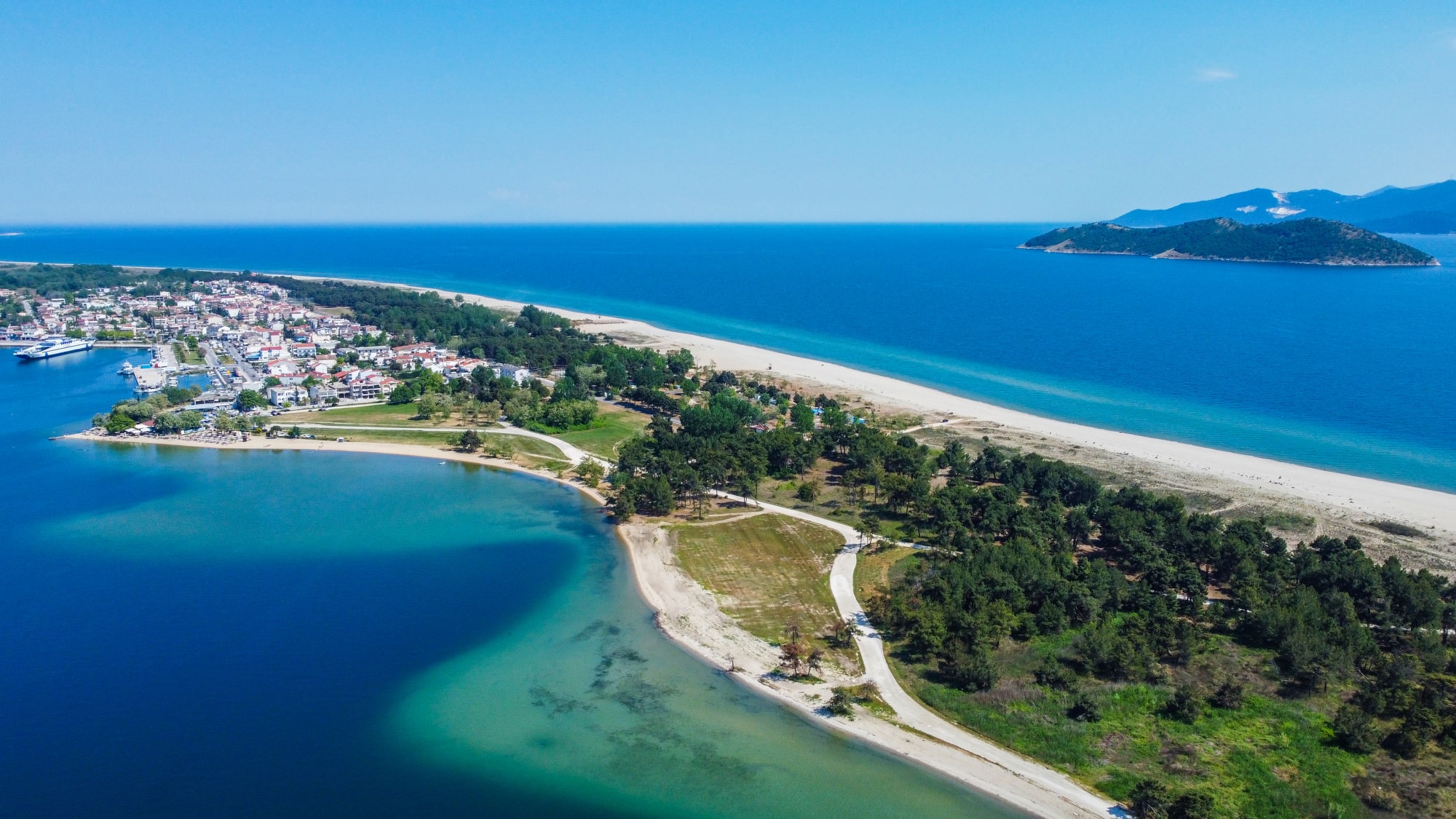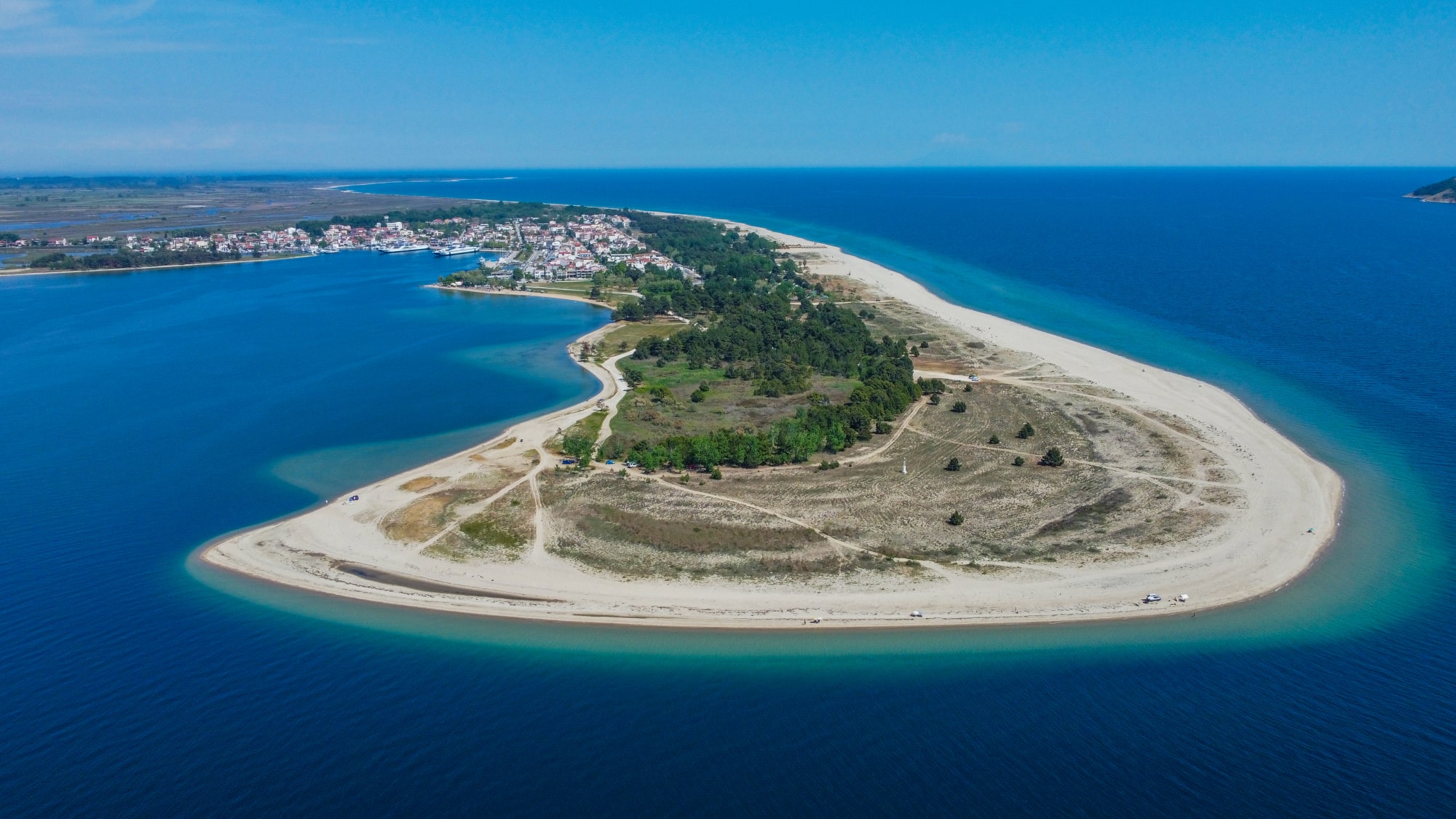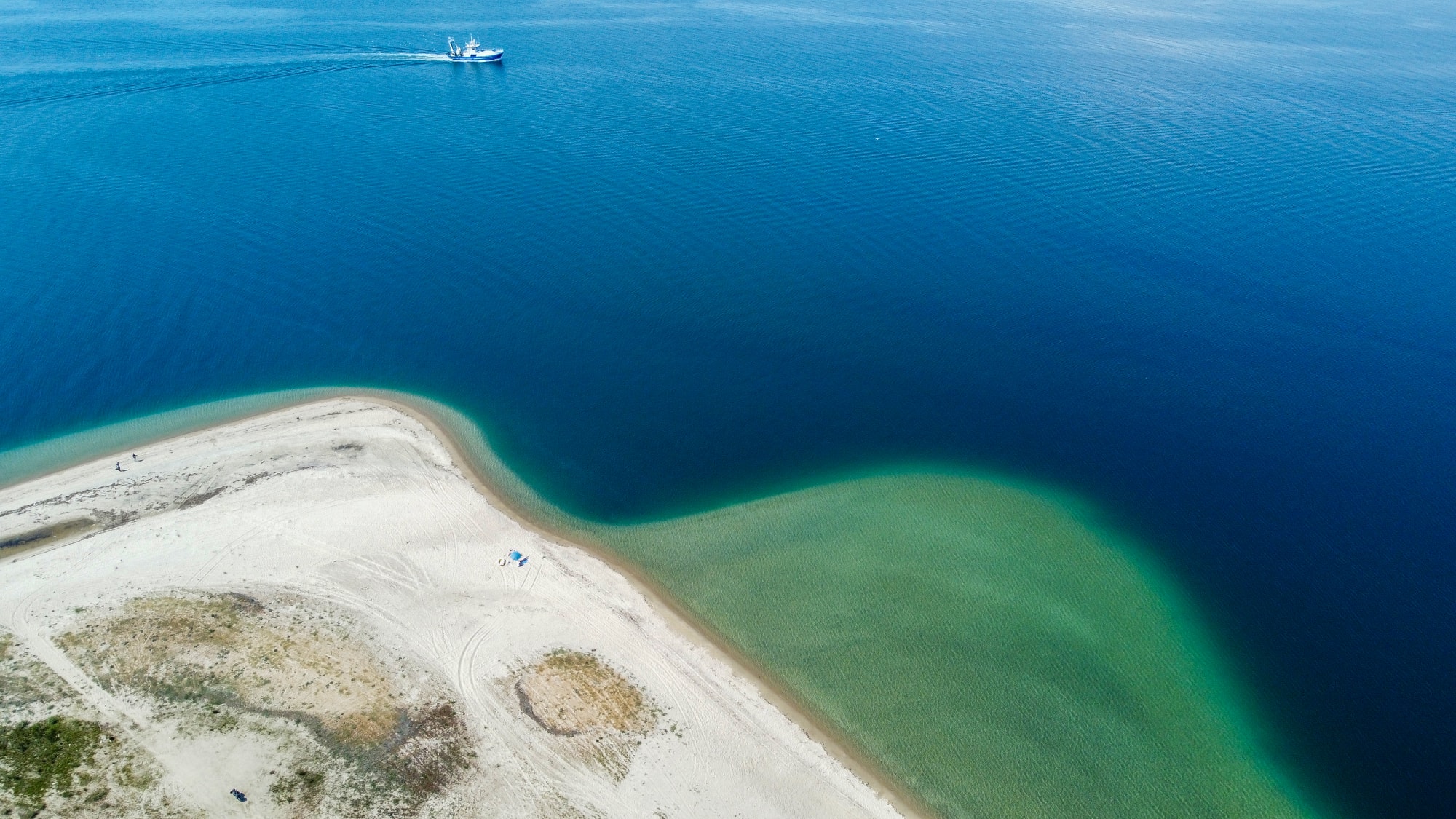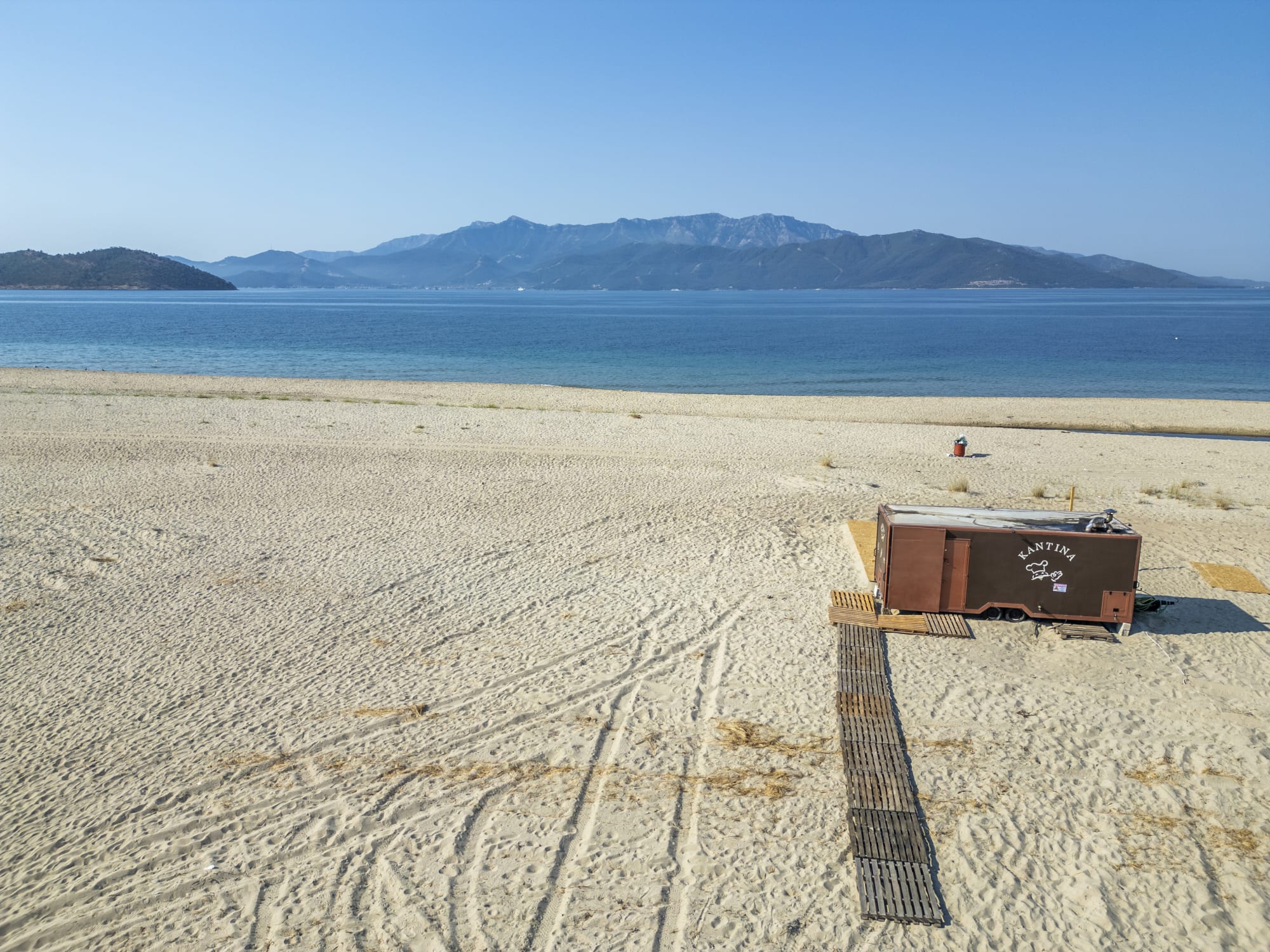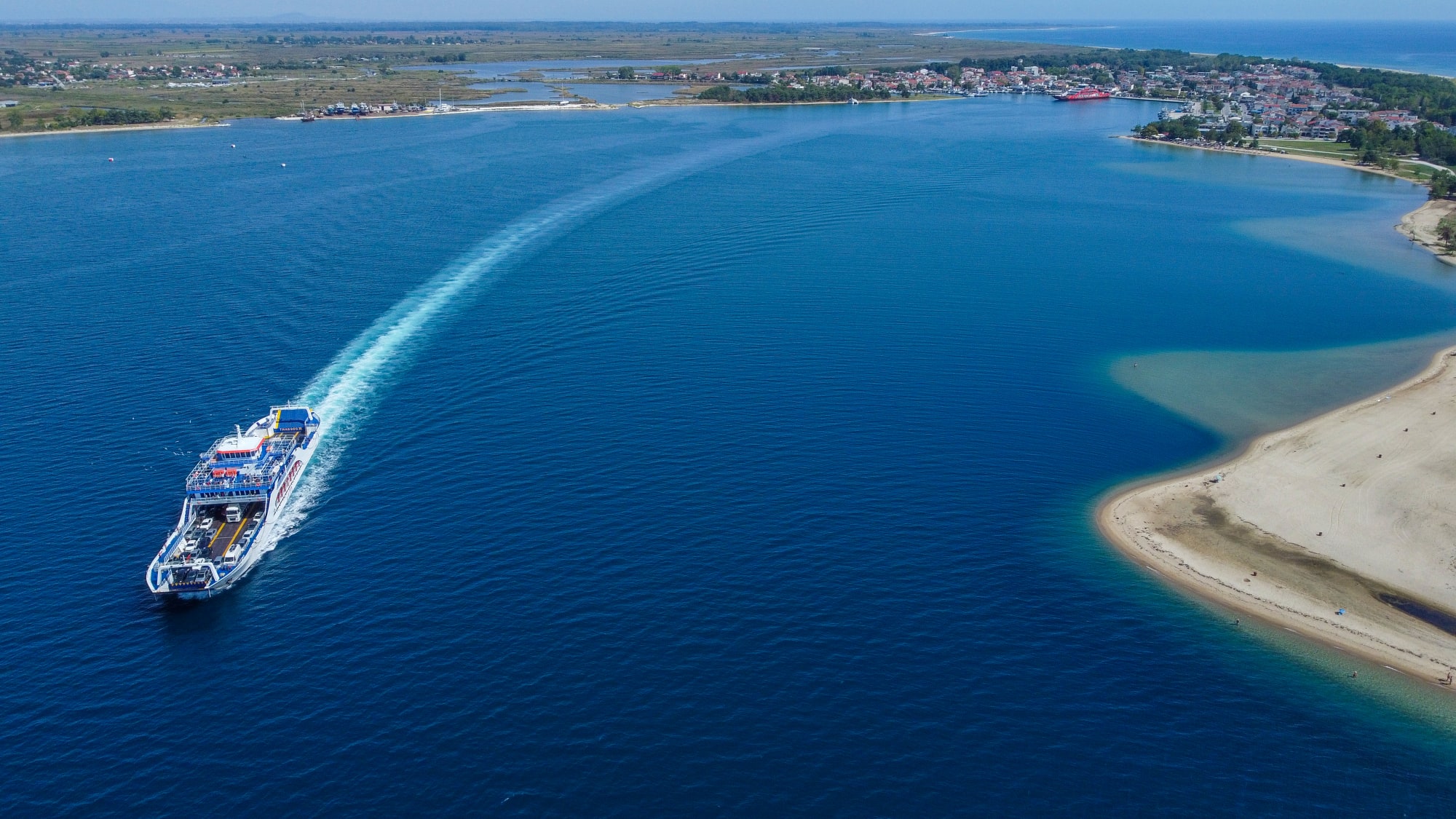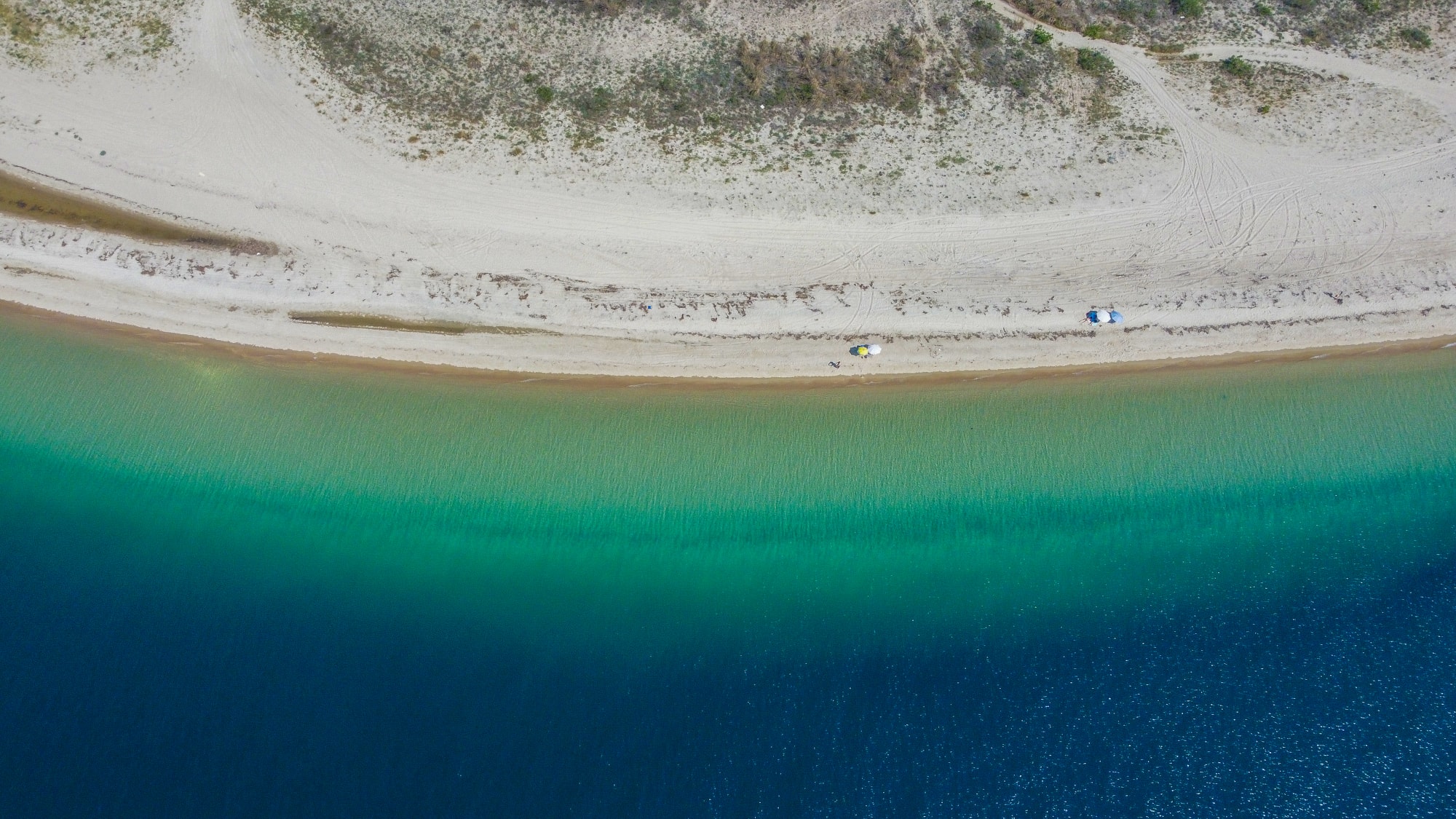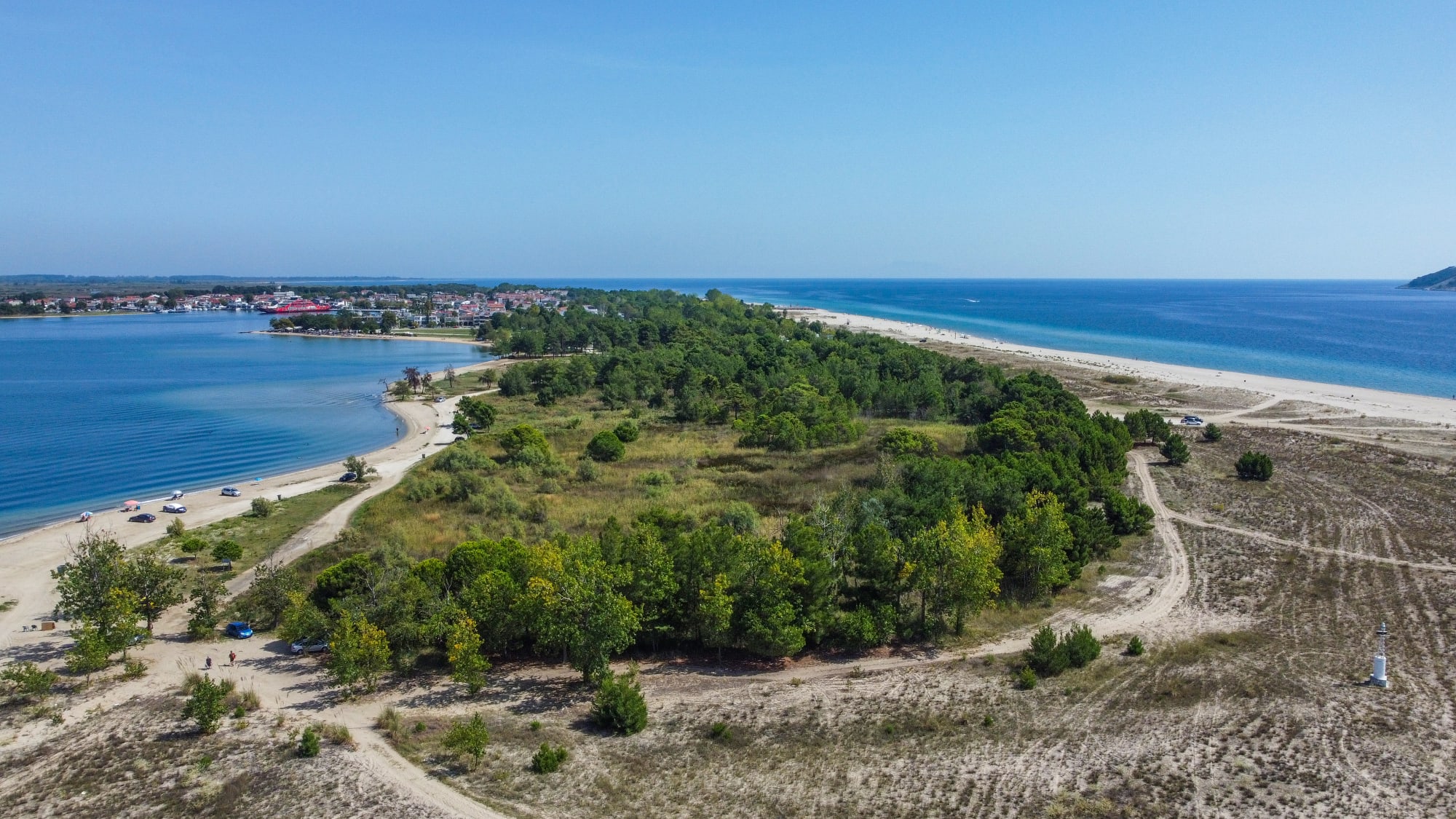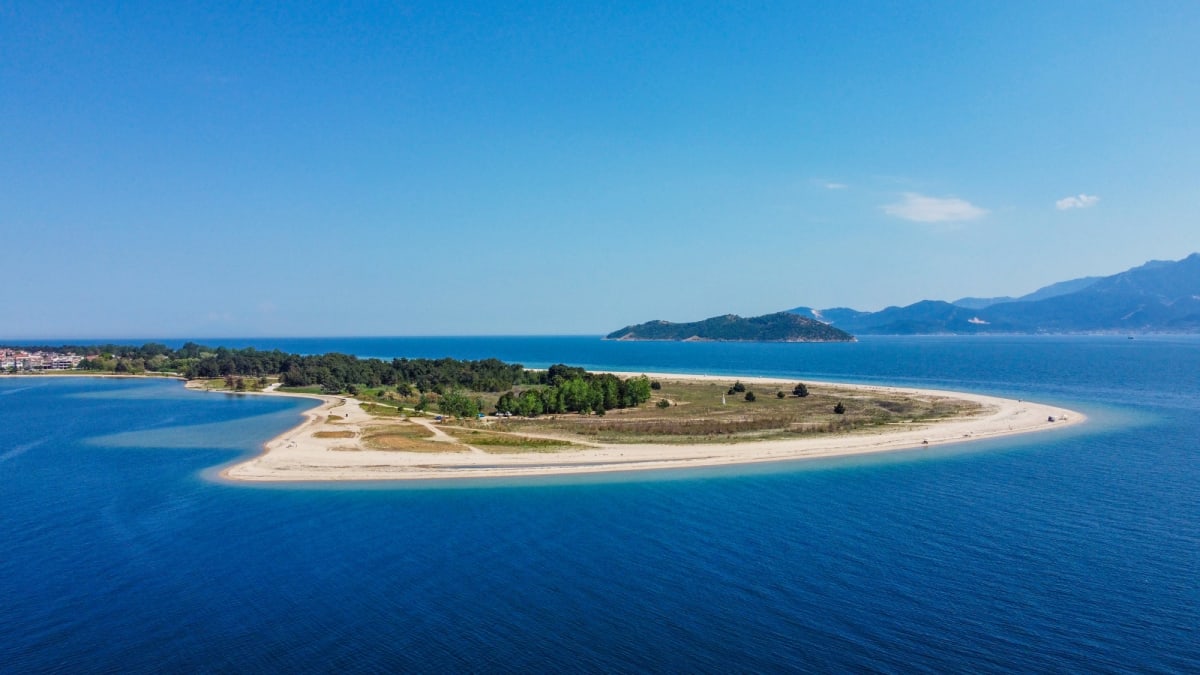
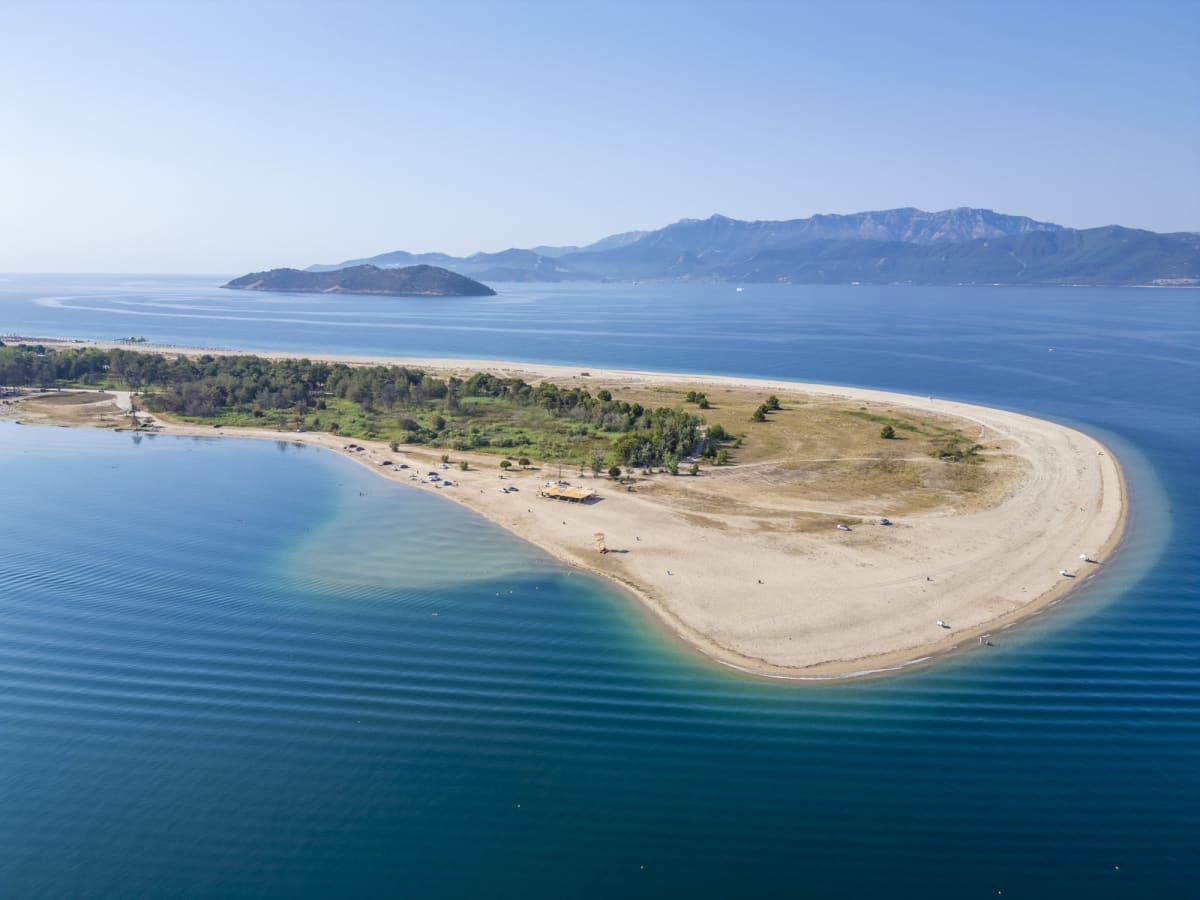
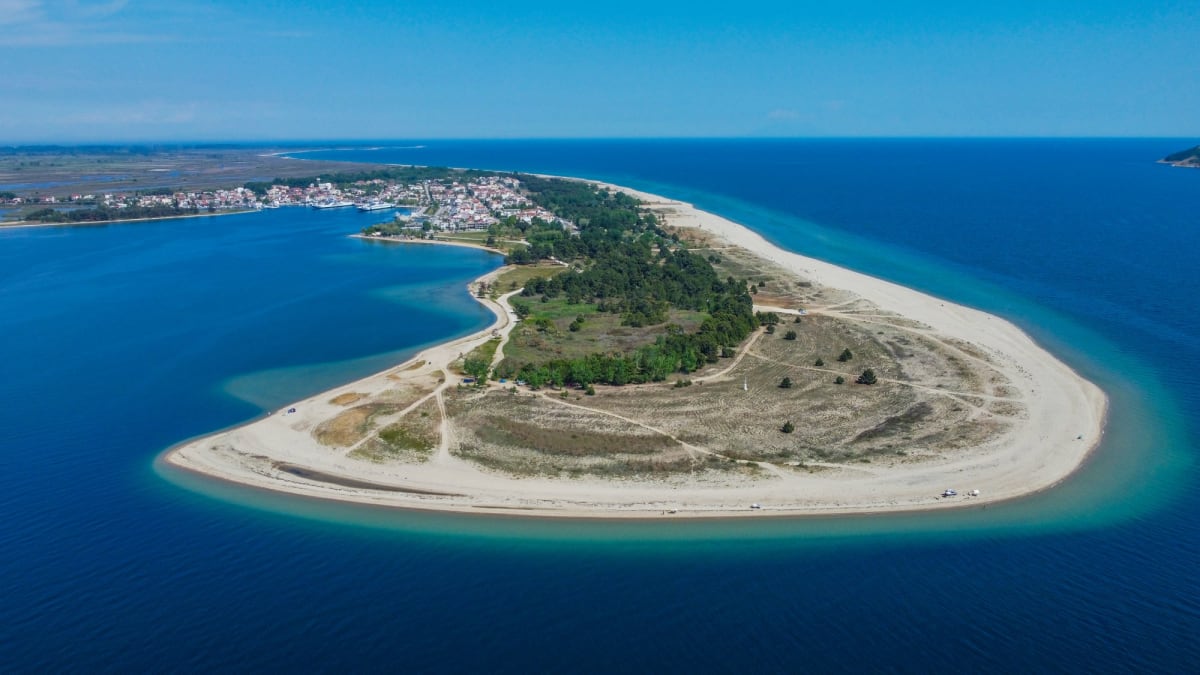
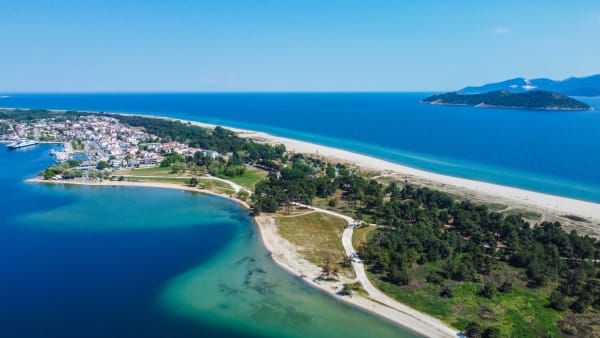
At Ammoglossa, you walk on a strip of land that seems to float between the sky and the Aegean. As you move along Ammoglossa of Keramoti, the scent of pine mingles with the salt air, and the noise of the world behind you fades, giving way to the rhythmic pulse of the waves. It is that exact moment you feel the fine, golden sand give way under every step, while your gaze is lost in the infinite blue, with Thassos standing imposing on the horizon, almost within reach. This is not just a beach; it is the sensation of walking on the edge of the world, in a Caribbean-like setting hidden in the heart of Macedonia.
Story Behind It
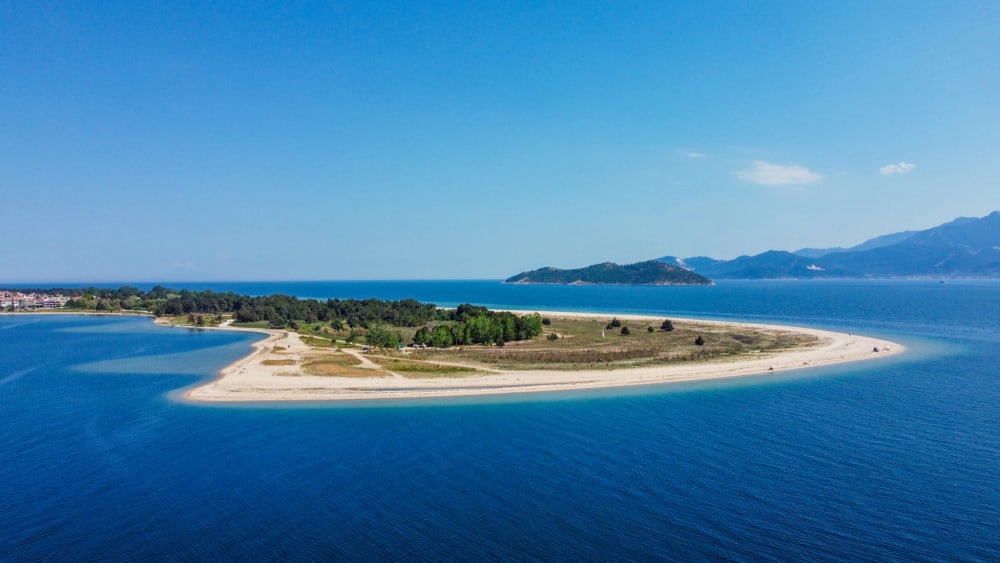
Ammoglossa is not static; it is a living, breathing organism. It was created by the persistent interplay of sea currents and the alluvial deposits brought by the Nestos River over centuries. This narrow "tongue" of land is constantly being redesigned by nature, serving simultaneously as a sanctuary for migratory birds that stop here to rest.
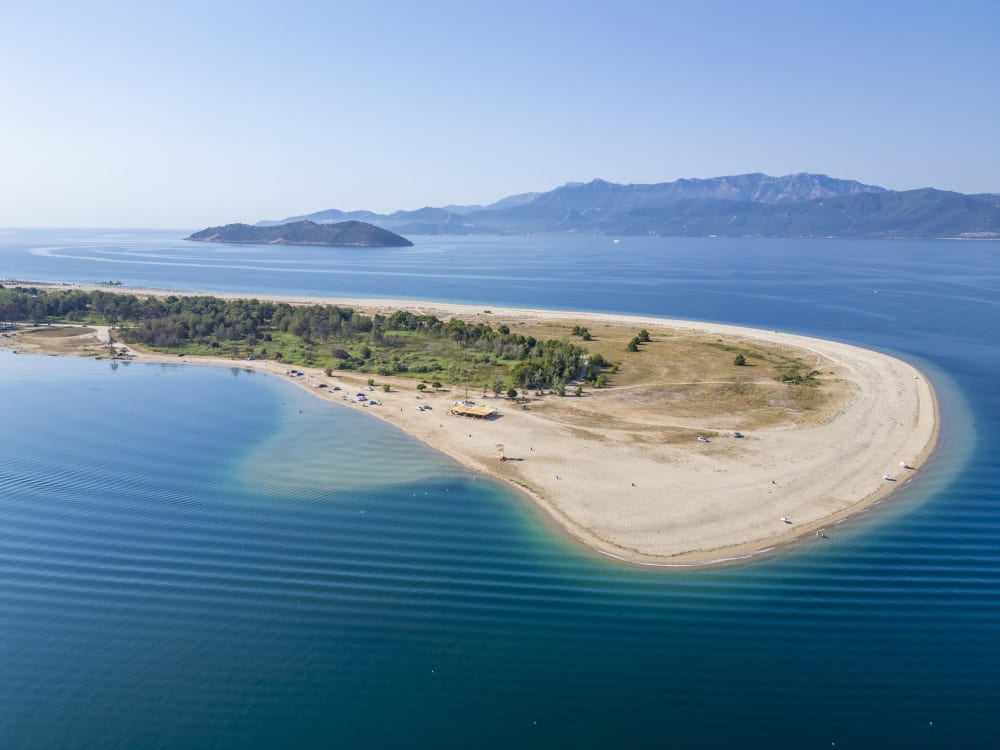
It is the result of an eternal struggle between the fresh water of the river and the salt of the sea.

Why We Love It
We love it because it offers that rare freedom of choice. You can find yourself in the heart of the action at one of the cosmopolitan beach bars, where the rhythmic bass sets the pace, or walk a few minutes further to discover your own isolated corner where the tranquility is absolute. Its waters are so shallow and warm that you feel like you are swimming in a massive natural pool, making it ideal for those who simply want to let go and lose track of time.
Fresh Tips
- Always carry insect repellent with you, especially in the afternoon hours, as the area has many mosquitoes.
- The sunset is truly magnificent, but it is better to enjoy it protected inside your car to avoid being bothered by insects.
- Be cautious when swimming, as the waters at Ammoglossa are deep and require care, especially if you are not an experienced swimmer.
- Do not miss the view from the ferry boat to Thassos, as the vantage point toward Ammoglossa from the sea is stunning and reveals the full scale of the formation.
- May is the best month for bird-watching, where if you are lucky, you can see Pelicans, Flamingos, Herons, Cormorants, and Black-winged Stilts stopping in the area.
Visual Journey